Send
fresh flowers for next day flower delivery throughout the UK at Clare Florist
Check this myth about food abusted
gaspard-ulliel - the young Hanibal lecter


Showing posts with label Biography. Show all posts

The Film Stars Who Died Before The Release of Their Final Films

Bernie Mac
The comedian Bernie Mac still stars in two movies opening this weekend. He died at the age of 50 of pneumonia this past August. He not only plays opposite Samuel L. Jackson in the endearingly foul-mouthed tale of two washed-up singers in "Soul Men." But he also lends his voice to DreamWorks' animated movie "Madagascar: Escape 2 Africa."

Heath Ledger - The Dark Knight
The Australian actor died while shooting Terry Gilliam's "The Imaginarium of Doctor Parnassus," but a trio of other stars -- Johnny Depp, Jude Law, and Colin Farrell -- stepped in to film the character's remaining scenes. Though he died of an accidental drug overdose this past January, a full seven months before "The Dark Knight" opened, Heath Ledger's performance as The Joker in Christopher Nolan's grim superhero blockbuster has already garnered Oscar talk.

James Dean - Giant
Dean was a mere 24 years old when he died in a car wreck in 1955. But in that short time, he starred in three movies and garnered two posthumous Oscar nominations, one for "East of Eden" and the other for "Giant."

Oliver Reed - Gladiator
Legendary British actor Oliver Reed died of a heart attack during production of this epic sword and sandal flick. As a result, a number of his scenes had to be re-edited using a double, digital effects, and plenty of shadows.

Bruce Lee - Enter the Dragon
Legend of martial genre film, Bruce Lee died just three weeks before his breakout movie opened, killed suddenly by a cerebral edema. "Enter the Dragon" proved to be such a hit -- one of the most profitable movies of all time -- and there was such a demand for its departed star that Hong Kong soon started cranking out films with leads named Bruce Li, Bruce Lei, Brute Lee, and Lee Bruce.

Brandon Lee - The Crow
Bruce Lee's son Brandon was killed in a freak on-set accident during filming of 1994's "The Crow.", in a coincidence so ghoulish people speculated there may have been some sort of "curse" involved. An improperly-cleaned prop gun discharged a blank that pierced Lee's abdomen and lodged in his spine. After the tragic mishap, production resumed using stunt doubles and digital trickery for the remaining scenes.

Spencer Tracy - Guess Who's Coming to Dinner
Spencer Tracy starred alongside Katharine Hepburn and Sydney Poiter in the 1967's landmark "Guess Who's Coming to Dinner," which broached the then-taboo subject of interracial marriage. Tracy's health was so bad prior to shooting that insurance companies refused to cover him for the production. He died after the film wrapped and posthumously received his ninth Oscar nomination.

Adrienne Shelly - Waitress
When "Waitress" premiered at the Sundance Film Festival in 2007, the film was hailed as being a sweet, witty comedy about one of life's true pleasures: pie. Sadly, writer/director/actress Adrienne Shelly was not there. She was murdered months prior by Diego Pillco, a New York City construction worker. He was sentenced to 25 years in prison earlier this year.

Peter Finch - Network
Though he did die two months after "Network" opened, Peter Finch, who brilliantly played crazed newscaster Howard Beale, is the only person to win an acting Oscar posthumously.

Tupac Shakur - Gridlock'd
Rapper Tupac Shakur proved to be almost as posthumously prolific in movies as he was with music. After he was killed in a drive-by shooting in Vegas in 1996, Tupac appeared in both "Gridlock'd" and "Gang Related," both of which were released the following year.

Clark Gable - The Misfits
The day shooting for John Huston's 1960 movie "The Misfits" wrapped, Clark Gable was reported to have said, "Christ, I'm glad this picture's finished. [Co-star Marilyn Monroe] damn near gave me a heart attack." He keeled over from a heart attack the next day and died 11 days later. "The Misfits" also proved to be Monroe's final film as well.

To hear Samuel L. Jackson, Sharon Leal and director Malcolm D. Lee reminisce about their experience working with Bernie Mac on "Soul Men," watch the exclusive interview below.

Source:
http://movies.yahoo.com

Abraham Lincoln Personal Life

Abraham Lincoln was born on February 12, 1809, to Thomas Lincoln and Nancy Hanks Lincoln, two uneducated farmers. He was born in a one-room log cabin on the 348-acre (1.4 km²) Sinking Spring Farm, in Nolin Creek, three miles (5 km) south of Hodgenville, in southeast Hardin County, Kentucky (now part of LaRue County), an area which, at that time, was considered the "frontier." The name Abraham was chosen to commemorate his grandfather, who was killed in an American Indian raid in 1786. His elder sister, Sarah Lincoln, was born in 1807; a younger brother, Thomas Jr, died in infancy. It is sometimes debated whether Abraham Lincoln had Marfan syndrome, an autosomal dominant disorder of the connective tissue characterized by long limbs and great physical stature.

For some time, Thomas Lincoln was a respected and relatively affluent citizen of the Kentucky back country. He had purchased Sinking Spring Farm in December 1808 for $200 cash and assumption of a debt. The family belonged to a Baptist church that had seceded from a larger church over the issue of slavery. While exposed to his parents' anti-slavery sentiment from a very young age, Lincoln never joined their church, or any other, and as a youth he ridiculed religion.

Times turned, however, and Thomas Lincoln lost all his property in a series of court cases. In 1816, when Lincoln was just seven years old, the family was forced to make a new start in Perry County (now in Spencer County), Indiana. He later noted that this move was "partly on account of slavery," and partly because of economic difficulties in Kentucky. In 1818, Lincoln's mother, then thirty-four years old, died of milk sickness: Lincoln was only nine at the time. Soon afterwards, his father remarried to Sarah Bush Johnston. Sarah Lincoln raised young Lincoln like one of her own children. Years later she compared Lincoln to her own son, saying "Both were good boys, but I must say — both now being dead that Abe was the best boy I ever saw or ever expect to see." Lincoln was affectionate toward his step-mother, whom he would call "Mother" for the rest of his life, but he was distant from his father.

He married Mary Todd, and they had four boys, only one of whom lived to maturity. In 1858 Lincoln ran against Stephen A. Douglas for Senator. He lost the election, but in debating with Douglas he gained a national reputation that won him the Republican nomination for President in 1860.

Entering the presidential nomination process as a distinct underdog, Lincoln was eventually chosen as the Republican candidate for the 1860 election for several reasons. His expressed views on slavery were seen as more moderate than those of rivals William H. Seward and Salmon P. Chase. His "Western" origins also appealed to the newer states: other contenders, especially those with more governmental experience, had acquired enemies within the party and were weak in the critical western states, while Lincoln was perceived as a moderate who could win the West. Most Republicans agreed with Lincoln that the North was the aggrieved party as the Slave Power tightened its grasp on the national government. Yet despite his Southern connections (his in-laws owned slaves), Lincoln misunderstood the depth of the revolution underway in the South and the emergence of Southern nationalism. Throughout the 1850s he denied that there would ever be a civil war, and his supporters repeatedly rejected claims that his election would incite secession.

Throughout the election, Lincoln did not campaign or give speeches. This was handled by the state and county Republican organizations, who used the latest techniques to sustain party enthusiasm and thus obtain high turnout. There was little effort to convert non-Republicans, and there was virtually no campaigning in the South except for a few border cities such as St. Louis, Missouri, and Wheeling, Virginia; indeed, the party did not even run a slate in most of the South. In the North, there were thousands of Republican speakers, tons of campaign posters and leaflets, and thousands of newspaper editorials. These focused first on the party platform, and second on Lincoln's life story, making the most of his boyhood poverty, his pioneer background, his native genius, and his rise from obscurity. His nicknames, "Honest Abe" and "the Rail-Splitter," were exploited to the full. The goal was to emphasize the superior power of "free labor," whereby a common farm boy could work his way to the top by his own efforts.

On November 6, 1860, Lincoln was elected as the 16th President of the United States, beating Democrat Stephen A. Douglas, John C. Breckinridge of the Southern Democrats, and John Bell of the new Constitutional Union Party. He was the first Republican president, winning entirely on the strength of his support in the North: he was not even on the ballot in nine states in the South, and won only 2 of 996 counties in the other Southern states. Lincoln gained 1,865,908 votes (39.9% of the total), for 180 electoral votes; Douglas, 1,380,202 (29.5%) for 12 electoral votes; Breckenridge, 848,019 (18.1%) for 72 electoral votes; and Bell, 590,901 (12.5%) for 39 electoral votes. There were fusion tickets in some states, but even if his opponents had combined in every state, Lincoln had a majority vote in all but two of the states in which he won the electoral votes and would still have won the electoral college and the election.

As Lincoln's election became more likely, secessionists made it clear that their states would leave the Union. South Carolina took the lead, followed by six other cotton-growing states in the deep South. The upper South (Delaware, Maryland, Virginia, North Carolina, Tennessee, Kentucky, Missouri, and Arkansas) listened to and rejected the secessionist appeal. They decided to stay in the Union, though they warned Lincoln that they would not support an invasion through their territory. The seven Confederate states seceded before Lincoln took office, declaring themselves to be a new nation, the Confederate States of America. President Buchanan and President-elect Lincoln refused to recognize the Confederacy.

President-elect Lincoln evaded possible assassins in Baltimore, and on February 23, 1861, arrived in disguise in Washington, D.C. At his inauguration on March 4, 1861, the German American Turners formed Lincoln's bodyguard; and a sizable garrison of federal troops was also present, ready to protect the capital from Confederate invasion and local insurrection.

But also Civil war has Begining on 1860, and goverment could not solve that. Conflict over issues of how much control the federal government should have over the states, industrialization, trade, and especially slavery had increased tension between Northern and Southern states. After Abraham Lincoln was elected president in 1860, 11 Southern states seceded (or withdrew) from the Union and set up an independent government--the Confederate States of America. These events led to the outbreak of the Civil War--a brutal, bloody, four-year conflict that left the South defeated and ended slavery at the cost of more than half a million lives.

Lincoln believed in the Whig theory of the presidency, which left Congress to write the laws while he signed them, vetoing only those bills that threatened his war powers. Thus, he signed the Homestead Act in 1862, making millions of acres of government-held land in the West available for purchase at very low cost. The Morrill Land-Grant Colleges Act, also signed in 1862, provided government grants for agricultural universities in each state. The Pacific Railway Acts of 1862 and 1864 granted federal support for the construction of the United States' first transcontinental railroad, which was completed in 1869. Other important legislation involved economic matters, including the first income tax and higher tariffs. Also included was the creation of the system of national banks by the National Banking Acts of 1863, 1864, and 1865, which allowed the creation of a strong national financial system.

In 1862, Lincoln sent a senior general, John Pope, to put down the "Sioux Uprising" in Minnesota. Presented with 303 death warrants for convicted Santee Dakota who had massacred innocent farmers, Lincoln affirmed 39 of these for execution (one was later reprieved).

Lincoln won re-election in 1864, as Union military triumphs heralded an end to the war. In his planning for peace, the President was flexible and generous, encouraging Southerners to lay down their arms and join speedily in reunion.

After Union victories at Gettysburg, Vicksburg and Chattanooga in 1863, victory seemed at hand, and Lincoln promoted Ulysses S. Grant General-in-Chief (March 12, 1864). When the spring campaigns turned into bloody stalemates, Lincoln supported Grant's strategy of wearing down Lee's Confederate army at the cost of heavy Union casualties. With an election looming, he easily defeated efforts to deny his renomination, and selected Andrew Johnson, a War Democrat from the Southern state of Tennessee, as his running mate in order to form a broader coalition. They ran on the new Union Party ticket uniting Republicans and War Democrats.

The spirit that guided him was clearly that of his Second Inaugural Address, now inscribed on one wall of the Lincoln Memorial in Washington, D. C.: "With malice toward none; with charity for all; with firmness in the right, as God gives us to see the right, let us strive on to finish the work we are in; to bind up the nation's wounds.... "

On Good Friday, April 14, 1865, Lincoln was assassinated at Ford's Theatre in Washington by John Wilkes Booth, an actor, who somehow thought he was helping the South. The opposite was the result, for with Lincoln's death, the possibility of peace with magnanimity died.


source: from any source

Muhammad Ali -- The Quotes

Muhammad Ali was a symbol of black pride and defiance during the 1960s. Ali was outspoken, boastful, and as his professional boxing career progressed, the reason became clear as to why he was called “the greatest.” His speed, his footwork, and his ability to take a punch were unmatched.

Muhammad Ali was born Cassius Marcellus Clay, Jr. to Cassius Marcellus Clay, Sr. and Odessa (Grady) Clay on January 17, 1942 in Louisville, Kentucky. Clay’s father worked painting billboards and signs and his mother worked as a domestic. Clay began boxing at the age of twelve, under the direction of Joe Martin. He began fighting in the amateur ranks. In the 1960 Olympic Games in Rome, he won a gold medal in the 175-pound division.

Following his ascension to champion, he famously revealed that he was a member of the Nation of Islam (often called the Black Muslims at the time) and Malcolm X provided Clay with the name Cassius X, discarding his surname as a symbol of his ancestors' enslavement, as had been done by other Nation members. On Friday, March 6, 1964, Malcolm X took Clay on a guided tour of the United Nations building (for a second time). Malcolm X announced that Clay would be granted his "X." That same night, Elijah Muhammad recorded a statement over the phone to be played over the radio that Clay would be renamed Muhammad (one who is worthy of praise) Ali (fourth rightly guided caliph). Only a few journalists (most notably Howard Cosell) accepted it at that time. The adoption of this name symbolized his new identity as a member of the Nation of Islam.

Ali converted from the Nation of Islam to Sect Sunni Islam in 1975. In a 2004 autobiography, written with daughter Hana Yasmeen Ali, Muhammad Ali attributes his conversion to the shift towards Sunni Islam made by W.D. Muhammad after he gained control of the Nation of Islam upon the death of his father, Elijah Muhammad in 1975.

Nor did they approve of his personal behavior: the self-promotions ("I am the greatest!"), his affiliation with the Muslims and giving up his "slave name" for Muhammad Ali ("I don't have to be what you want me to be; I'm free to be what I want"), the poetry (his ability to compose rhymes on the run could very well qualify him as the first rapper) or the quips ("If Ali says a mosquito can pull a plow, don't ask how. Hitch him up!"). At the press conferences, the reporters were sullen. Ali would turn on them. "Why ain't you taking notice?" or "Why ain't you laughing?"

Here some quotes from him:

  • Champions aren't made in gyms. Champions are made from something they have deep inside them-a desire, a dream, a vision. They have to have last-minute stamina, they have to be a little faster, they have to have the skill and the will. But the will must be stronger than the skill.
  • Friendship... is not something you learn in school. But if you haven't learned the meaning of friendship, you really haven't learned anything.
  • He who is not courageous enough to take risks will accomplish nothing in life.
  • What keeps me going is goals.
  • When you are as great as I am it is hard to be humble.
  • Wars of nations are fought to change maps. But wars of poverty are fought to map change.
  • There are no pleasures in a fight but some of my fights have been a pleasure to win.
  • The man who views the world at 50 the same as he did at 20 has wasted 30 years of his life.
  • Silence is golden when you can't think of a good answer.
  • Prejudice comes from being in the dark; sunlight disinfects it.
  • Old age is just a record of one's whole life.
  • It's the repetition of affirmations that leads to· belief. And once that belief becomes a deep conviction, things begin to happen.
  • It's not bragging if you can back it up.
  • It isn't the mountains ahead to climb that wear you out; it's the pebble in your shoe.
  • I am America. I am the part you won't recognize. But get used to me. Black, confident, cocky; my name, not yours; my religion, not yours; my goals, my own; get used to me.
  • We have one life; it soon will be past; what we do for God is all that will last.
  • To be able to give away riches is mandatory if you wish to possess them. This is the only way that you will be truly rich.
  • The man who has no imagination has no wings.
  • Service to others is the rent you pay for your room here on earth.

Valentine's Day Greeting Cards by Esther A. Howland

from http://www.emotionscards.com/museum/estherhowland.htm


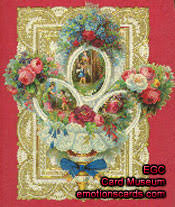
Americans probably began exchanging hand-made valentines in the early 1700s. The first commercial Valentine's Day greeting cards produced in the U.S. were created in the 1840s by Esther A. Howland (1828-1904). Howland, known as the Mother of the Valentine, made elaborate creations with real lace, ribbons and colorful pictures known as "scrap". Esther Allen Howland was born in 1828 at 16 Summer Street in Worcester, Massachusetts. She was a pioneer in the American valentine manufacturing industry. It was after her graduation from Mount Holyoke College, in 1847, that she received her first English valentine. Fascinated with the idea of making similar valentines, she imported the necessary paper lace and floral decorations from England. She began taking orders for valentines, and was surprised to discover a demand for more than she could make by herself. She then recruited friends to assist her, and issued her first advertisement in a Worcester paper, The Daily Spy, on Feb. 5, 1850. The assembly line operation that began in her home eventually led to a thriving business grossing $100,000 annually. She retired in 1881, selling her business to the George C. Whitney Company.


The golden age for artistic, sentimental valentines was the period from 1840-1860. The advent of embossed, and then perforated lace paper for making valentines in England was enthusiastically acclaimed, and many were imported to America. The earliest paper lace developed in England was copied from handmade "real" lace, at first embossed by hand, later pressed by machinery. It was many years before such papers were produced in America, so that when Esther Howland began creating her valentines, it was still from lace-edged blanks purchased from England.


Esther Howland is credited with several innovations in valentine design. One was the small brightly colored wafer of paper placed to give contrast under the white paper lace; another was the built-up shadow box that became popular in the latter part of her career.

Thomas Alva Edison -- From Early Life To Inventions


Early Life

Thomas Alva Edison was born on February 11, 1847 in the canal town of Milan, Ohio; He is the last of seven children of Samuel and Nancy Edison. His mother, Nancy, had been a school teacher; his father, Samuel, was a Canadian political firebrand who was exiled from his country. When Edison was seven his family moved to Port Huron, Michigan. Edison lived here until he struck out on his own at the age of sixteen.

Edison had very little formal education as a child, attending school only for a few months. By the teacher, he was unpotensial student and his ability was below average (did you know that he was a kid who has dyslexia). Finaly, he was taught reading, writing, and arithmetic by his mother. But he was always a very curious child and taught himself much by reading on his own. This belief in self-improvement remained throughout his life.

In 1859, Edison began working at an early age, as most boys did at the time. At thirteen he took a job as a newsboy, selling newspapers and candy on the local of the Grand Trunk Railroad that ran through Port Huron to Detroit. He seems to have spent much of his free time reading scientific, and technical books, and also had the opportunity at this time to learn how to operate a telegraph. At one point he printed a newspaper on the train, and he also conducted chemical experiments in a baggage-car laboratory.

By 1862, he was sixteen, Edison was proficient enough to work as a telegrapher full time. From 1863 to 1867 he traveled through the Midwest as an itinerant telegrapher. During these years he read widely, studied and experimented with telegraph technology, and generally acquainted himself with electrical science.

Early Inventive Career

The development of the telegraph was the first step in the communication revolution, and the telegraph industry expanded rapidly in the second half of the 19th century. This rapid growth gave Edison and others like him a chance to travel, see the country, and gain experience. Edison worked in a number of cities throughout the United States before arriving in Boston in 1868. In 1868 Edison began to change his profession from telegrapher to inventor. He received his first patent on an electric vote recorder, a device intended for use by elected bodies such as Congress to speed the voting process. This invention was a commercial failure. Edison resolved that in the future he would only invent things that he was certain the public would want.

Edison moved to New York City in 1869. He continued to work on inventions related to the telegraph, and developed his first successful invention, an improved stock tickers called the "Universal Stock Printer". Edison soon acquired a reputation as a first-rank inventor. His work included, fire alarms, methods of sending simultaneous messages on one wire, and an electrochemical telegraph to send messages by automatic machinery. The crowning achievement of this period was the quadruplex telegraph, which sent two messages simultaneously in each direction on one wire. For this and some related inventions Edison was paid $40,000. This gave Edison the money he needed to set up his first small laboratory and manufacturing facility in Newark, New Jersey in 1871. During the next five years, Edison worked in Newark inventing and manufacturing devices that greatly improved the speed and efficiency of the telegraph. He also found to time to get married to Mary Stilwell and start a family.

The problems of interfering signals in multiple telegraphy and high speed in automatic transmission forced Edison to extend his study of electromagnetism and chemistry. As a result, he introduced electrical and chemical laboratories into his experimental machine shops.

Near the end of 1875, observations of strange sparks in telegraph instruments led Edison into a public scientific controversy over what he called "etheric force," which only later was understood to be radio waves.

Menlo Park

In 1876 Edison sold all his Newark manufacturing concerns and moved his family and staff of assistants to the small village of Menlo Park, twenty-five miles southwest of New York City. Edison established a new facility containing all the equipment necessary to work on any invention. This research and development laboratory was the first of its kind anywhere; the model for later, modern facilities such as Bell Laboratories, this is sometimes considered to be Edison's greatest invention. Here Edison began to change the world. Edison created a freestanding industrial research facility incorporating both a machine shop and laboratories. In Menlo Park, on the rail line between New York City and Philadelphia, he developed three of his greatest inventions

Urged by Western Union to develop a telephone that could compete with Alexander Graham Bell's, Edison invented a transmitter in which a button of compressed carbon changed its resistance as it was vibrated by the sound of the user's voice, a new principle that was used in telephones for the next century.

While working on the telephone in the summer of 1877, Edison discovered a method of recording sound, and in the late fall he unveiled the phonograph. It was the tin foil phonograph, the first machine that could record and reproduce sound created a sensation. This astounding instrument brought him world fame as the "Wizard of Menlo Park" and the "inventor of the age". Edison toured the country with the tin foil phonograph, and was invited to the White House to demonstrate it to President Rutherford B. Hayes in April 1878.

Finally, beginning in the fall of 1878, Edison devoted thirty months to developing a complete system of incandescent electric lighting, his greatest challenge. During his lamp experiments, he noticed an electrical phenomenon that became known as the "Edison effect," the basis for vacuum-tube electronics.The idea of electric lighting was not new, and a number of people had worked on, and even developed forms of electric lighting. But up to that time, nothing had been developed that was remotely practical for home use. Edison's eventual achievement was inventing not just an incandescent electric light, but also an electric lighting system that contained all the elements necessary to make the incandescent light practical, safe, and economical. After one and a half years of work, success was achieved when an incandescent lamp with a filament of carbonized sewing thread burned for thirteen and a half hours. The first public demonstration of the Edison's incandescent lighting system was in December 1879, when the Menlo Park laboratory complex was electrically lighted. Edison spent the next several years creating the electric industry.

In September 1882, the first commercial power station, located on Pearl Street in lower Manhattan, went into operation providing light and power to customers in a one square mile area; the electric age had begun. He left Menlo Park in 1881 to establish factories and offices in New York and elsewhere. Over the next five years he manufactured, improved, and installed his electrical system around the world.

West Orange Laboratory

In 1887, Edison built an industrial research laboratory in West Orange, New Jersey, that remained unsurpassed until the twentieth century. For four years it was the primary research facility for the Edison lighting companies, and Edison spent most of his time on that work. In 1888 and 1889, he concentrated for several months on a new version of the phonograph that recorded on wax cylinders.

The success of his electric light brought Edison to new heights of fame and wealth, as electricity spread around the world. Edison's various electric companies continued to grow until in 1889 they were brought together to form Edison General Electric. Despite the use of Edison in the company title however, Edison never controlled this company. The tremendous amount of capital needed to develop the incandescent lighting industry had necessitated the involvement of investment bankers such as J.P. Morgan. When Edison General Electric merged with its leading competitor Thompson-Houston in 1892, Edison was dropped from the name, and the company became simply General Electric.


This period of success was marred by the death of Edison's wife Mary in 1884. Edison's involvement in the business end of the electric industry had caused Edison to spend less time in Menlo Park. After Mary's death, Edison was there even less, living instead in New York City with his three children. A year later, while vacationing at a friends house in New England, Edison met Mina Miller and fell in love. The couple was married in February 1886 and moved to West Orange, New Jersey where Edison had purchased an estate, Glenmont, for his bride. Thomas Edison lived here with Mina until his death.


When Edison moved to West Orange, he was doing experimental work in makeshift facilities in his electric lamp factory in nearby Harrison, New Jersey. A few months after his marriage, however, Edison decided to build a new laboratory in West Orange itself, less than a mile from his home. Edison possessed the both the resources and experience by this time to build, "the best equipped and largest laboratory extant and the facilities superior to any other for rapid and cheap development of an invention ". The new laboratory complex consisting of five buildings opened in November 1887. A three story main laboratory building contained a power plant, machine shops, stock rooms, experimental rooms and a large library. Four smaller one story buildings built perpendicular to the main building contained a physics lab, chemistry lab, metallurgy lab, pattern shop, and chemical storage. The large size of the laboratory not only allowed Edison to work on any sort of project, but also allowed him to work on as many as ten or twenty projects at once. Facilities were added to the laboratory or modified to meet Edison's changing needs as he continued to work in this complex until his death in 1931. Over the years, factories to manufacture Edison inventions were built around the laboratory. The entire laboratory and factory complex eventually covered more than twenty acres and employed 10,000 people at its peak during World War One (1914-1918).


After opening the new laboratory, Edison began to work on the phonograph again, having set the project aside to develop the electric light in the late 1870s. By the 1890s, Edison began to manufacture phonographs for both home, and business use. Like the electric light, Edison developed everything needed to have a phonograph work, including records to play, equipment to record the records, and equipment to manufacture the records and the machines. In the process of making the phonograph practical, Edison created the recording industry. The development and improvement of the phonograph was an ongoing project, continuing almost until Edison's death.

Edison worked with William Dickson from 1888 till 1893 on a motion picture camera. Although Edison had always had experimental assistants, this was the clearest instance of a co-invention for which Edison received sole credit.

Later Years

After the mining failure, Edison adapted some of the machinery to process Portland cement. A roasting kiln he developed became an industry standard. Edison cement was used for buildings, dams, and even Yankee Stadium.

In the early years of the automobile industry there were hopes for an electric vehicle, and Edison spent the first decade of the twentieth century trying to develop a suitable storage battery. Although gas power won out, Edison's battery was used extensively in industry.

In World War I the federal government asked Edison to head the Naval Consulting Board, which examined inventions submitted for military use. Edison worked on several problems, including submarine detectors and gun location techniques.

In the past of 1920, his healthy began drop. At eighty four years old, October 18, 1931, he was death. By the time of his death in 1931 received 1,093 U.S. patents, a total still untouched by any other inventor. Even more important, he created a model for modern industrial research.

Thomas Alva Edison


Like Ben Franklin, Thomas Alva Edison was both a scientist and an inventor. Born in 1847, Edison had very little formal education as a child, attending school only for a few months. By the teacher, he was unpotensial student and his ability was below average (did you know that he was a kid who has dyslexia). Finaly, he was taught reading, writing, and arithmetic by his mother. Edison would see tremendous change take place in his lifetime. He was also to be responsible for making many of those changes occur.

When Edison was born, society still thought of electricity as a novelty, a fad. By the time he died, entire cities were lit by electricity. Much of the credit for that progress goes to Edison. In his lifetime, Edison patented 1,093 inventions, earning him the nickname "The Wizard of Menlo Park." The most famous of his inventions was an incandescent light bulb. Besides the light bulb, Edison developed the phonograph and the "kinetoscope," a small box for viewing moving films.

He also improved upon the original design of the stock ticker, the telegraph, and Alexander Graham Bell's telephone. He believed in hard work, sometimes working twenty hours a day. Edison was quoted as saying, "Genius is one percent inspiration and 99 percent perspiration." In tribute to this important American, electric lights in the United States were dimmed for one minute on October 21, 1931, a few days after his death.